Introduction: The Tremor in the Settling Tank
During my 15 years as a marine engineer and technical superintendent, the engine room was my world. In that sweltering heat, surrounded by the deafening roar of machinery, I often held a drop of fuel oil and realized: this is not just a chemical compound. It is the pulse of globl trade.
When the Strait of Hormuz tightens, the first tremor is not felt in financial markets, but in the fuel settling tanks of ships at sea. In this guide, we decode the “Maritime Code” of fuel – from the distillation tower to the high seas.
1. The Anatomy of Oil: Why Ships Eat the “Leftovers”
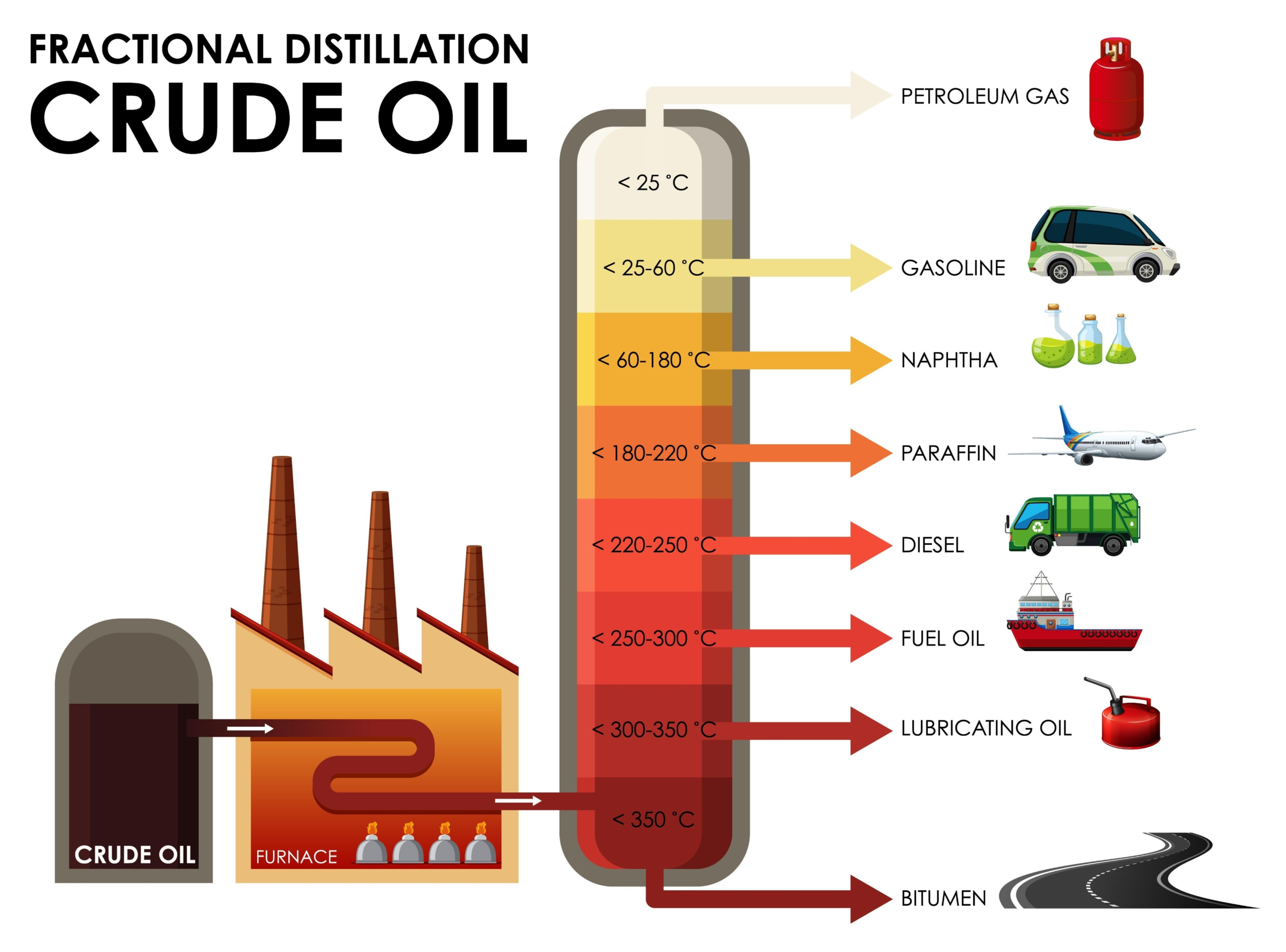
Crude oil is a complex mixture. At the fefinery, it undergoes Fractional Distillation, separated by boiling points. Traditionally, ships have consumed what remains at the bottom of this process.

| Fuel Category | Main Use Case | Characteristics |
| LPG / Naphtha | Heating / Petrochemicals | Extremely Light, Low Boiling Point |
| Gasoline | Passenger Cars | High Volatility, Refined |
| Kerosene | Aviation (Jet Fuel) | HIgh Prity, Stable Burn |
| Diesel / Gas Oil | Trucks / Industry / Ships | High Energy Density, “Industrial Blood” |
| Heavy Fuel Oil | Large Marine Engines | High Viscosity, Residual Fuel |
2. The Diesel Price Paradox: Why it Outpaces Gasoline
Why does diesel (MGO) sometimes cost more than gasoline? As a technical strategist, I look at the Industrial Demand and Supply Rigidity.
- Fixed Yield: A fefinery cannot magically turn gasoline into diesel. If the world needs more transport fuel, but gasoline cars are decreasing (EV rise), the supply of diesel remains capped by the crude barrel’s natural limits.
- Geopolitic Friction: The Russia-Ukraine conflict proved this. Europe’s heavy reliance on Russian middle distillates caused a “Diesel Crunch,” sending MGO prices soaring at bunker stations globally.
3. IMO 2020: The New Engine Room Crisis (VLSFO)
the shift to Very Low Sulfur Fuel Oil (VLSFO) was a noble environmental move, but for us in the engine room, it introduced a new “Code” of risks.
The Superintendent’s Insight: VLSFO is often a blend of mismatched components. It my experience, mixing two different batches can lead to Incompatibility, resulting in massive sludge formation. I’ve seen purifiers overflow and fuel pumps stick, risking a total blackout in critical waters. This is why fuel management is no longer just “technical” – it’s a survival strategy.
4. Global Oil Geopolitics: The Power of Three
The price you pay at the bunker manifold is dictated by these three giants:
- The Middle East (OPEC): Holds the “valve” of global supply and controls jey choke points like the Suez Canal.
- The United States: The “Swing Producer” thanks to the Shale Revolution.
- Russia: A dominant force whose geopolitical moves can instantly re-route the world’s tanker fleet.
5. Conclusion Decoding the Furture
Understanding fuel is understanding the world. For 15 years, I saw these connections through a pressure gauge. Now, through The Vessel Code, I translate that tacit knowledge into a digital system.
Whether you are an owner, a manage, or an engineer, the goal is the same: stay ahead of the risk.
Kyoung-Chul Kim
Chief Engineer & Technical Strategist
Founder of The Vessel Code
Tel : (82) 10-3889-4291
E-mail : [email protected]